Text
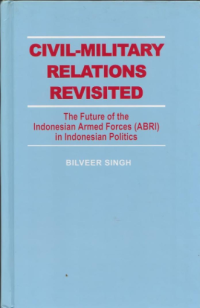
Civil-Military Relations Revisited : The Future of the Indonesian Armed Forces (ABRI) in Indonesian Politics
In the 1960s and 1970s, many Third World countries experienced military interventions of one kind or another in politics, or were involved in praetorianism, where the military as an institution emerged as the key political actor by virtue of its actual or threatened use of force. However, by the beginning of the 1980s, an increasing number of military-oriented governments returned to the barracks with political power foisted into the hands of the civilians. Just as with military intervention, studies show that there are internal and external factors in influencing the military to return power to the civilians. In the main, however, civil-military relations in any one setting are influenced by the existing political culture as well as the power relations between the military and civilians at any one time. While the civil-military literature has made the separation of the civilian and military institutions as the centrepiece of theory, yet in reality, this largely 'Western', and more often than not, 'Anglo-Saxon' approach to civil-military relations fail to capture the essence of such relations in many Third World settings. This is especially true in the Indonesian case.
Ketersediaan
Informasi Detail
- Judul Seri
-
-
- No. Panggil
-
355.3 BIL c
- Penerbit
- Singapore : Crescent Design Associates., 1999
- Deskripsi Fisik
-
xxi + 357 Hlm. ; 14,5 x 22 cm
- Bahasa
-
English
- ISBN/ISSN
-
9810413874
- Klasifikasi
-
355.3
- Tipe Isi
-
-
- Tipe Media
-
-
- Tipe Pembawa
-
-
- Edisi
-
Cet. 1
- Subjek
- Info Detail Spesifik
-
-
- Pernyataan Tanggungjawab
-
Bilveer Singh
Versi lain/terkait
Tidak tersedia versi lain
Lampiran Berkas
Komentar
Anda harus masuk sebelum memberikan komentar
 Karya Umum
  Filsafat
  Agama
Agama  Ilmu-ilmu Sosial
  Bahasa
  Ilmu-ilmu Murni
  Ilmu-ilmu Terapan
  Kesenian, Hiburan, dan Olahraga
  Kesusastraan
  Geografi dan Sejarah